
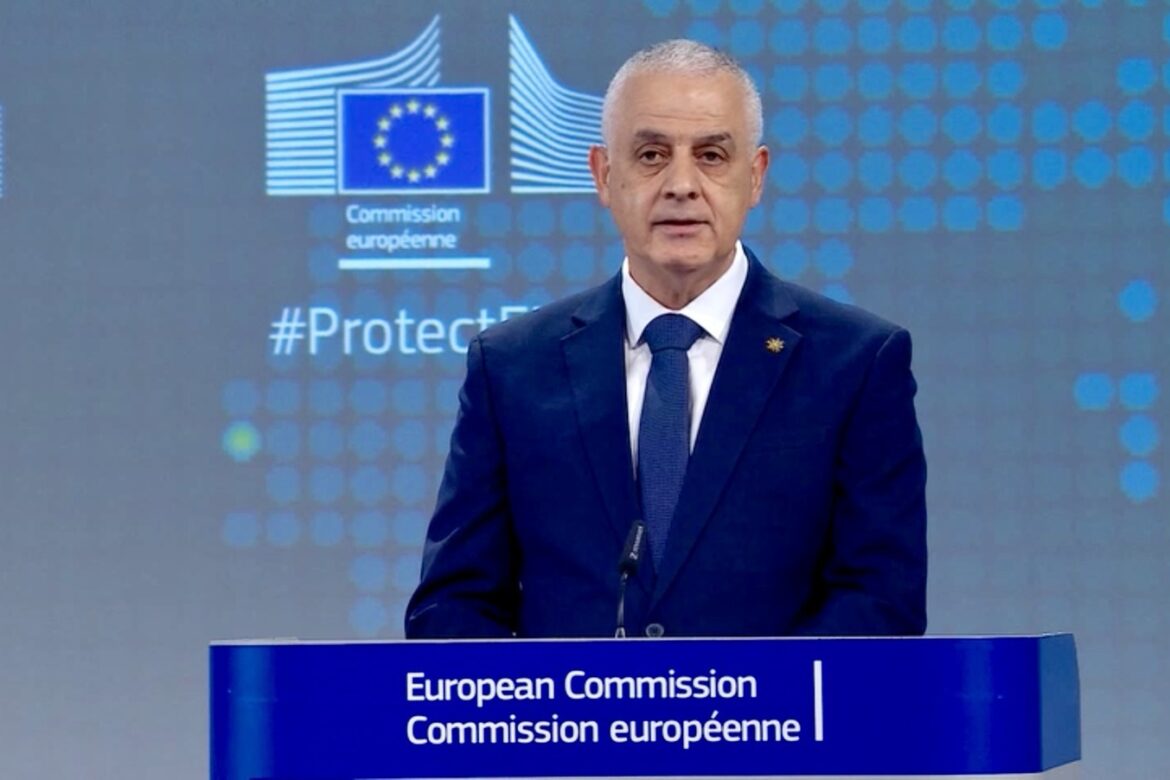
Ομιλία κ. Θεμιστού Αρναούτη, Αρχηγού Αστυνομίας Κύπρου, εκ μέρους της Κυπριακής Προεδρίας του Συμβουλίου της Ευρωπαϊκής Ένωσης – Δημοσιογραφική Διάσκεψη – 26 Ιουνίου 2026 – Βρυξέλλες
Mr. European Commissioner for Internal Affairs and Migration
Mr. Acting Executive Director of Europol
Ladies and Gentlemen,
Good morning.
It is a privilege and an honour, to address you today in my dual capacity as Chief of the Cyprus Police and on behalf of the Cyprus Presidency of the Council of the European Union.
Allow me first to acknowledge and commend Europol and the Member States for their exceptional work in preparing the report “Decoding the EU’s Most Threatening Criminal Networks,” for which we are gathered here today.
Through the valuable contributions of Member States and the expertise of Europol’s Strategic Analysis Team, this report provides a comprehensive and evidence-based assessment of the organised crime landscape across the European Union. More importantly, it enhances our understanding of how the most threatening criminal networks operate and identifies the actions required to effectively identify, disrupt and dismantle them.
This report is not merely an assessment of the current threat landscape. It is a call to action.
Organised crime continues to evolve rapidly, becoming increasingly sophisticated, transnational and resilient. Criminal networks exploit technological developments, operate across borders and adapt quickly to emerging opportunities and vulnerabilities. According to the report, 731 threatening criminal networks have been identified as operating within the European Union, demonstrating both the scale and complexity of the challenge we face.
The findings clearly show that these networks exploit vulnerabilities in logistics, financial systems, digital infrastructure and global trade. Their activities affect not only public security but also economic stability, public trust and the rule of law. Organised crime is therefore not solely a law enforcement challenge; it is a challenge to the resilience and prosperity of our societies.
For this reason, combating organised crime remains a strategic priority for both the Republic of Cyprus and the European Union.
During the Cyprus Presidency of the Council of the European Union, under the priority of “Autonomy through Security, Defence Readiness and Preparedness,” we consistently emphasised the importance of
• enhanced operational cooperation,
• systematic information sharing and
• coordinated action among all competent authorities.
Dear all,
The strength of criminal networks lies in their ability to operate across borders. Therefore, our strength must lie in our ability to work across them.
One example of these efforts was the recent meeting of the European Network on the Administrative Approach (ENAA), held under the Cyprus Chairmanship, here in Brussels. During that meeting, Cyprus strongly supported further strengthening the administrative approach by engaging non-law enforcement authorities and the private sector, in preventing and combating serious and organised crime.
This is particularly relevant when considering one of the report’s most striking findings: approximately 85% of the most threatening criminal networks exploit legal business structures to facilitate or conceal their criminal activities. This demonstrates the need for a whole-of-government and multidisciplinary approach.
As the Presidency, we have consistently advocated for
• stronger engagement of regulatory and supervisory authorities,
• the broader and more strategic use of administrative tools, and
• the early disruption of criminal infiltration into legitimate economic structures.
Cyprus, like many European countries, continues to face challenges associated with organised criminal activity.
Drug trafficking remains one of the most profitable criminal markets and continues to represent a significant threat. At the same time, we are witnessing increasing involvement in cyber-enabled fraud, money laundering, extortion, illegal gambling and other serious criminal offences.
Of the 59 criminal networks identified as active in Cyprus, ten were assessed among the most threatening and were included in our national contribution to this report. Eight of these networks are primarily involved in drug trafficking, while the remaining networks are associated with extortion, illegal gambling, money laundering and other serious criminal activities.
Recognising the need for an even stronger and more coordinated response, the Cyprus Police is currently establishing a dedicated Directorate for Combating Organised Crime. Drawing upon best practices adopted by Europol and partner law enforcement agencies across Europe, the Directorate will serve as the central entity responsible for combating organised crime in Cyprus.
Its mission is to strengthen intelligence capabilities, enhance operational effectiveness, improve coordination and ensure a unified national response. Ultimately, our objective is not simply to arrest individual offenders but to identify, disrupt and dismantle entire criminal networks, target their leadership structures and deprive them of the assets and profits that sustain their activities.
In this regard, through Operational Task Forces, member states, investigators, analysts and operational experts work together under a common framework, with one target to combat organised crime. Moreover, the European Multidisciplinary Platform Against Criminal Threats (EMPACT) remains one of the European Union’s most important operational instruments for combating serious and organised crime.
The latest EU Serious and Organised Crime Threat Assessment (SOCTA) identified “Most Threatening Criminal Networks and Individuals” as one of the key crime priorities requiring coordinated European action. The dedicated EMPACT Operational Action Plan addressing this threat demonstrates the value of a multidisciplinary approach that combines prevention, intelligence, operational action, investigations and capacity building.
The findings of the report presented today, together with the latest SOCTA, offer an invaluable understanding of the threats we face. They support evidence-based policymaking, strategic planning, and operational prioritisation at both national and European levels.
No country can tackle organised crime alone. The strength of criminal networks lies in their ability to operate across jurisdictions, adapt rapidly and exploit vulnerabilities wherever they exist. Our strength must lie in our unity, our cooperation and our collective determination.
As Europol has highlighted through the ABCD framework, criminal networks are agile, borderless, controlling and destructive. To effectively counter them, we too must be
• agile in our response,
• borderless in our cooperation,
• determined in our actions and
• relentless in our efforts.
Cyprus remains fully committed to working alongside Europol, EMPACT partners, Member States and international organisations to protect our citizens, safeguard the rule of law and contribute to a safer and more secure Europe.
Together, we can ensure that organised crime does not dictate the future of our societies.
Δείτε το σχετικό δελτίο τύπου της Αστυνομίας Κύπρου: “Στο επίκεντρο της Ευρωπαϊκής συζήτησης για την καταπολέμηση του οργανωμένου εγκλήματος βρέθηκε η Κυπριακή Προεδρία“
Δείτε το Δελτίο Τύπου της Europol: “Criminal opportunism: how the EU’s most threatening criminal networks exploit society – Europol report reveals how 76% of the networks identified in 2024 have since been disrupted, but new threats emerge and old ones persist“
